In this article I also Interview the artist Luigi Serafini about his work and his language. Meeting with Luigi Serafini to talk about borders, art, bio-creativity, sustainability.
I want to know what is actually born in that border space where the beyond and the Other meet.
Because often the most unexpected things arise there.
This is exactly the area that Serafini has always explored: the connection between different words that touch, intermix and generate imaginary creatures, unknown alphabets, hybrid visions.
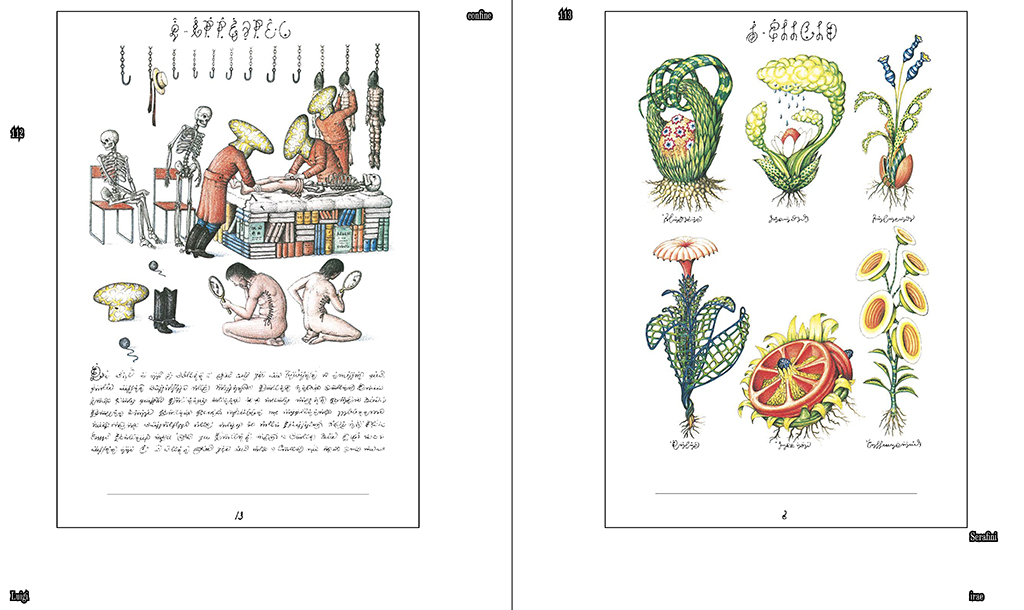
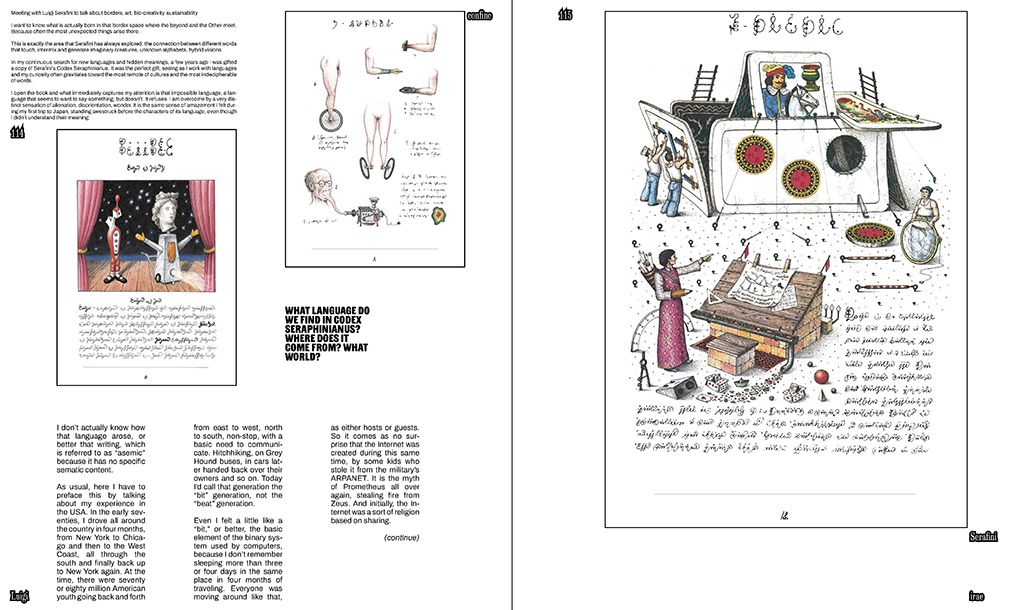
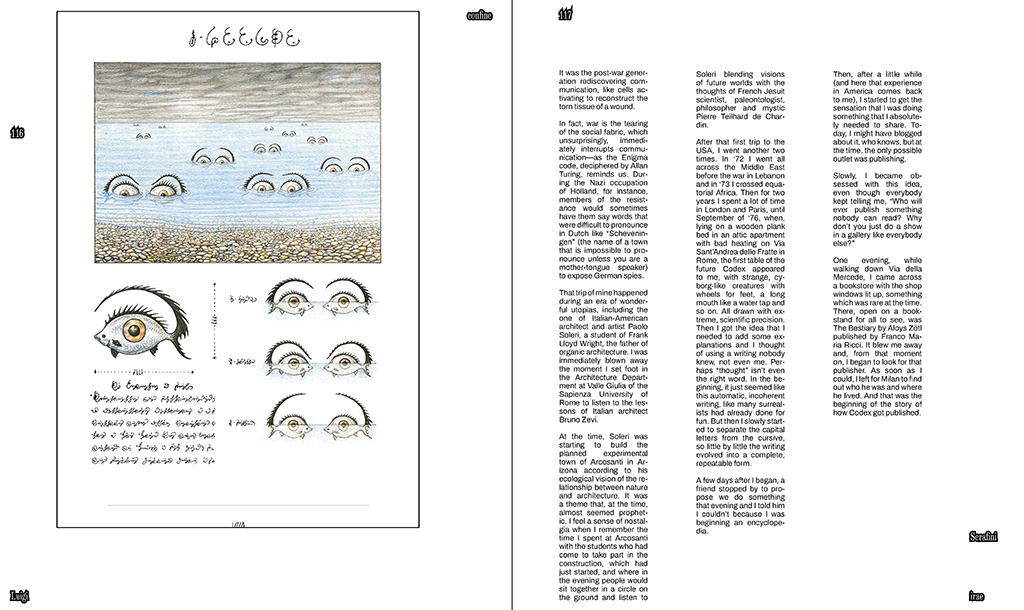
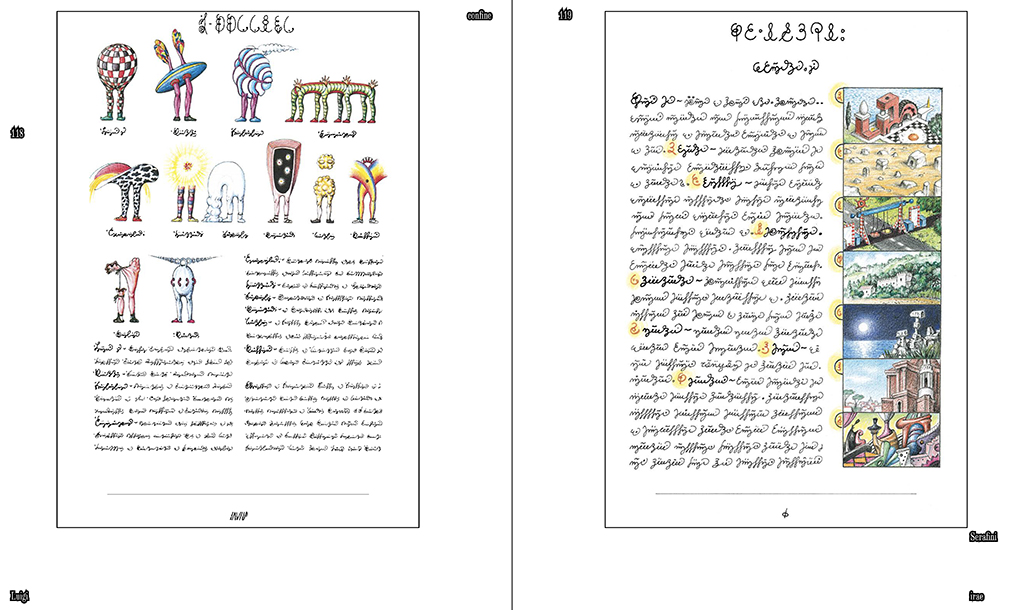
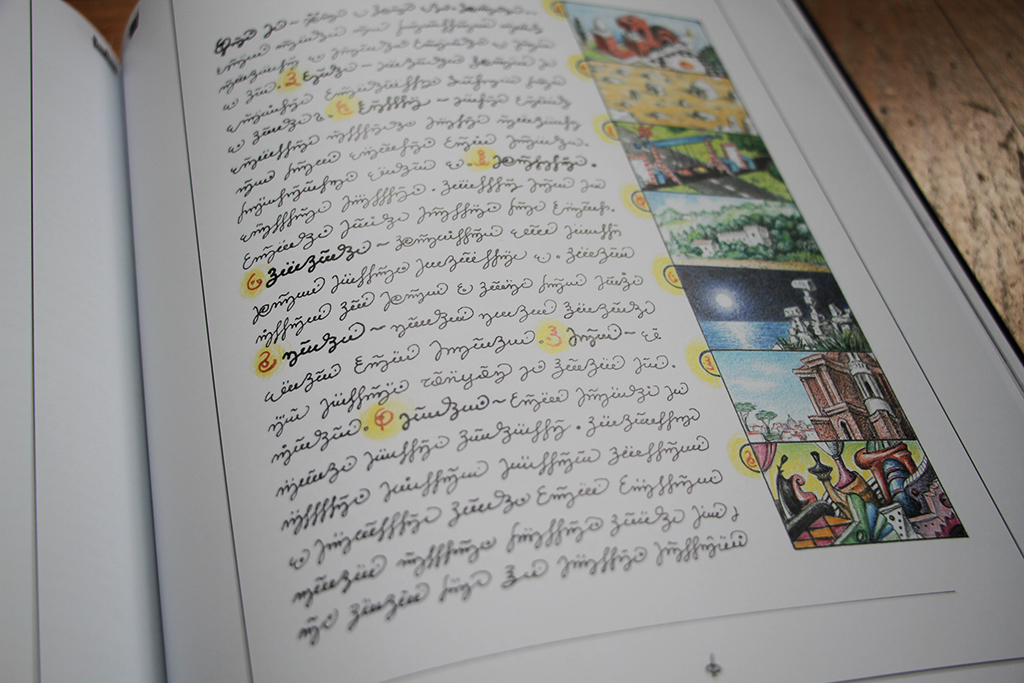
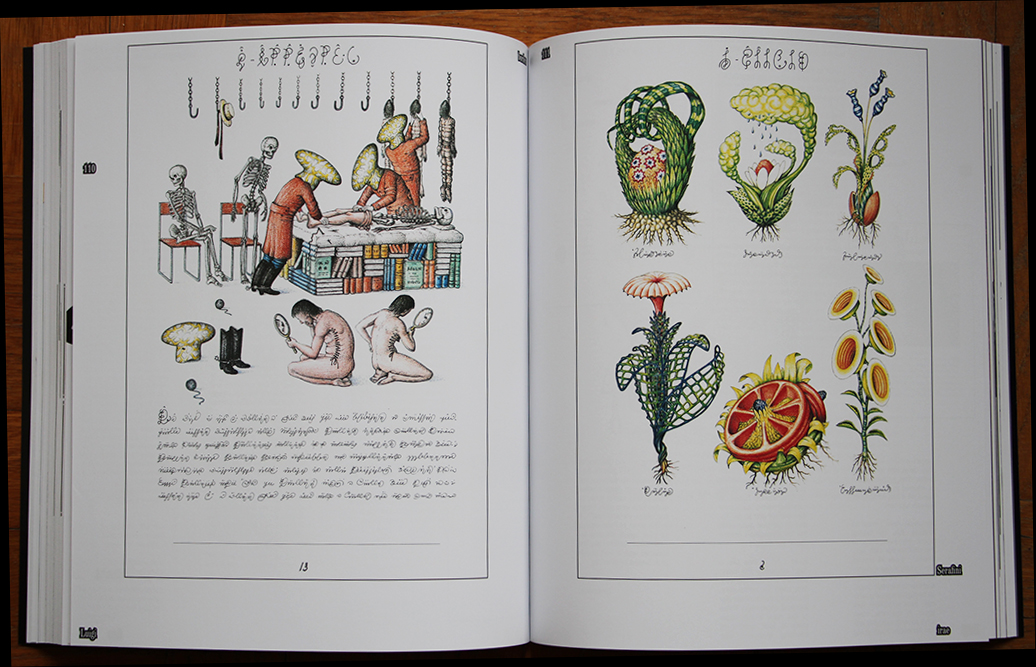
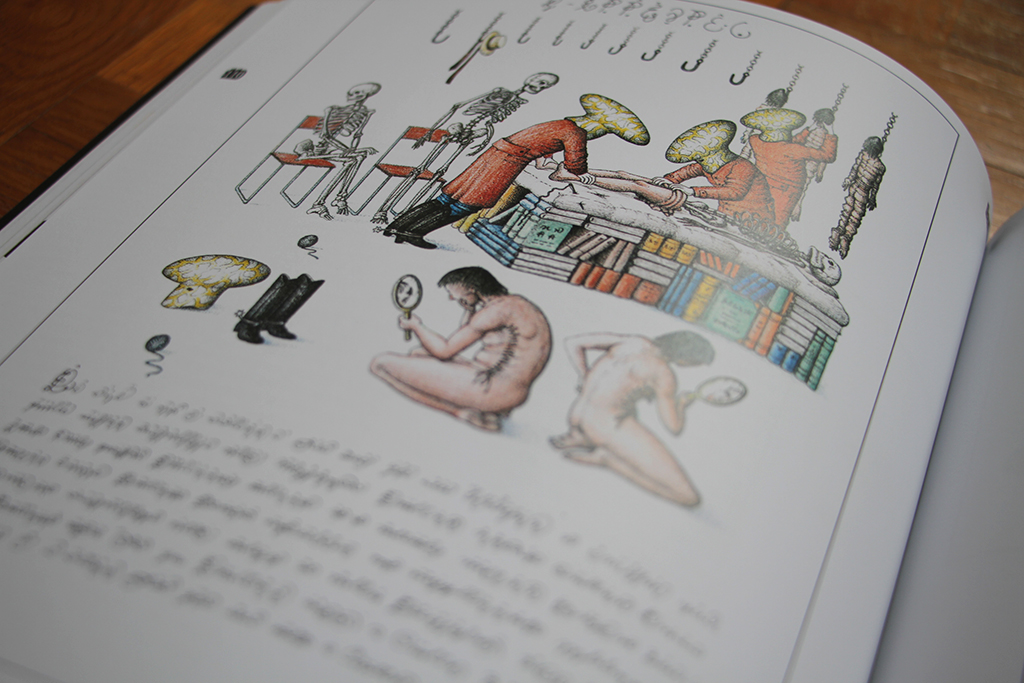
In my continuous search for new languages and hidden meanings, a few years ago I was gifted a copy of Serafini’s Codex Seraphinianus. It was the perfect gift, seeing as I work with languages and my curiosity often gravitates toward the most remote of cultures and the most indecipherable of words.
I open the book and what immediately captures my attention is that impossible language, a language that seems to want to say something, but doesn’t. It refuses. I am overcome by a very distinct sensation of alienation, disorientation, wonder. It is the same sense of amazement I felt during my first trip to Japan, standing awestruck before the characters of its language, even though I didn’t understand their meaning.
There is a thin thread connecting the forms of life on Earth, and at times it is only visible if you look from a certain distance. It is the thread of diversity — of species, cultures, languages — that weaves the fabric of our world. It isn’t just nature that is varied and surprising. Even human cultures, their ways of inhabiting the world, their stories about it and the names they give it are expressions of a deep, invisible, powerful biodiversity.
The Earth isn’t just a planet to save. It is a living thing, made of natural cycles and meanings that each culture helps to generate. When we lose a species, the ecological balance is thrown off. Even when a language or a culture disappears, an entire way of feeling, thinking, imagining fades away. The crisis of the biosphere, its ability to regenerate and repair itself is also a cultural crisis.
Because cultures, like forests, are the keepers of balances, memories, rituals.
Art has always played a special role in all this. It inhabits the thresholds. It lives on the borders between nature and culture, between what is known and what has yet to be named.
In 2009 Swedish scientist Johan Rockström and his team traced out an invisible map of the nine planetary boundaries. These boundaries are thresholds that must not be crossed if we want to ensure our world remains inhabitable, and they include climate change, freshwater use, ocean acidification, the loss of soil and especially the integrity of the biosphere. Today, six of these nine boundaries have already been crossed. It is a delicate balance, and what we often forget is that environmental sustainability cannot exist without cultural and linguistic diversity.
Because even words are habitat. Even stories are roots. Each language is like a forest of sound.
A world made up of images, gestures and emotions that intertwine and shape experience. When a language is lost — and today this happens every two weeks — we lose more than just words. We lose whole systems of knowledge: names of plants, fishing techniques, rituals of time and space, collective memory.
Protecting languages is an ecological act. And not just of conservation but of creation. Because when differences come together, it gives rise to new ideas.
There, in that space where one language touches another, bio-creativity is generated. A flowering of meaning, hybridization, invention.
Supporting a culture doesn’t mean freezing it in the past. It means allowing it to evolve without losing its soul, just like a river that changes form but not direction. Resilient cultures can regenerate. They are rooted in the local area but open to world outside. In this way, art becomes a form of regeneration, an act that keeps and transforms, that activates memory and imagines futures.
Artistic practices are places of crossing, symbolic spaces of rebirth. And this is exactly what bio-creativity is: the ability to regenerate without erasing differences. An act of birth, not fusion. An entirely new experience that honors origins and enables them to dance together.
A generative force beats within the heart of biodiversity, both natural and cultural: the force of bio-creativity. Life’s talent is that it can constantly reinvent itself, mix, change its skin. In nature, variety is what ensures resilience. Intermixing opens up possibilities. It strengthens the ecosystem.
The same happens with languages, with cultures. Borders, if observed up close, are not walls. They are places of exchange, of dialogue, of transformation. Words travel, mix, are reinvented. Contact gives rise to language hybrids, new idioms, original metaphors, artistic forms that look like nothing ever seen before. That is where the future blossoms.
Each language that encounters another is like a seed sprouting: a third possibility arises. And this third thing is neither one nor the other. It is a new fruit, an original energy. It is a laboratory of shared imagination, where what is different is not feared but listened to, welcomed, transformed.
And yet we live in a time that seems to want to flatten everything. A time when the algorithms decide what we see, what we listen to, what we read, what we like and dislike. In Filterworld, American journalist and author Kyle Chayka describes this filtered, tamed cultural landscape, where diversity is erased in the name of a global asthetic, smooth and predictable.
We are in the age of the monoculture of the imagination, where even words all sound the same, images all look glossy, emotions are all tamed. It is the same logic of agricultural monoculture: more efficiency, less life. Yet, technology can also be an ally. It can document, protect, give a new voice to threatened languages and cultures. It is up to us to decide how to use it: to make everything the same or to valorize differences. As South-Korean-born philosopher Byung-Chul Han reminds us, we are selling out beauty for something simply pleasant. But art still has the power to resist, to disturb, to propose. To break through.
Languages and cultures are seeds, and like all seeds, they hold the promise new flowering. Each word saved, each gesture handed down, each creative mark is an act of care. An invitation not to lose touch with the living, not to forget who we have been in order to find out who we can become. If we truly want a sustainable future, we have to cultivate plurality like we cultivate a garden. With patience, a willing ear, respect. And by allowing bio-creativity to expand into the cracks, into the in-between spaces, into the crossings. Because it is there in the cracks of what is already known that newness is born. Art is the soil where seeds can take root. Where mixing is a fertile gesture. Where differences are not erased, they are amplified. Because the future is not singular. It is a mosaic, and each piece is essential.
My Interview to Luigi Serafini
Meeting with Luigi Serafini to talk about borders, art, bio-creativity, sustainability
I want to know what is actually born in that border space where the beyond and the Other meet.
Because often the most unexpected things arise there.
This is exactly the area that Serafini has always explored: the connection between different words that touch, intermix and generate imaginary creatures, unknown alphabets, hybrid visions.
In my continuous search for new languages and hidden meanings, a few years ago I was gifted a copy of Serafini’s Codex Seraphinianus. It was the perfect gift, seeing as I work with languages and my curiosity often gravitates toward the most remote of cultures and the most indecipherable of words.
I open the book and what immediately captures my attention is that impossible language, a language that seems to want to say something, but doesn’t. It refuses. I am overcome by a very distinct sensation of alienation, disorientation, wonder. It is the same sense of amazement I felt during my first trip to Japan, standing awestruck before the characters of its language, even though I didn’t understand their meaning.